


An Insider’s Guide to the City’s Most Rooted, Soulful Cuisine
Naati Food in Bengaluru | Traditional Karnataka Cuisine & Local Dining – StayEatSee
From naati chicken curries to rustic jolada rotis, Bengaluru’s naati food scene reveals the city’s deepest culinary roots. An insider guide for curious travellers and locals.
Beneath Bengaluru’s global reputation for craft cocktails, specialty coffee, and modern dining lies a food culture that is far older, quieter, and infinitely more personal. Naati food — literally meaning local or of the land — is the city’s most honest expression of Karnataka’s culinary soul.
This is food shaped by farms, seasons, and memory. Recipes passed down rather than written, flavours built patiently rather than plated theatrically. To seek out naati food in Bengaluru is to step away from trends and into the everyday lives of the people who have shaped the region.
For travellers, it offers a deeper, more grounded way of understanding the city.
What Exactly Is Naati Food?
Naati food refers to traditional, regional Karnataka cooking, often associated with rural kitchens, old Bengaluru neighbourhoods, and community-run eateries. The emphasis is on native ingredients, slow cooking, and bold, unapologetic flavours.
Key characteristics include:
- Use of local grains like ragi and jolada
- Freshly ground masalas made daily
- Liberal use of coconut, tamarind, and chillies
- Minimal processing and zero fuss
While naati food is often associated with non-vegetarian cooking, especially chicken and mutton, vegetarian naati dishes are equally rich and deeply satisfying.
The Heart of the Cuisine: Naati Chicken & Beyond
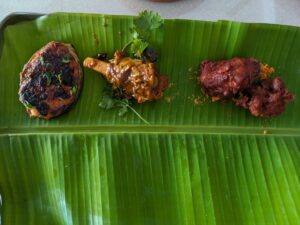
At the centre of Bengaluru’s naati food culture is naati chicken — free-range, country chicken cooked slowly until the meat absorbs layers of spice and depth. The result is a curry that is robust, slightly chewy, and intensely flavourful.
But the cuisine goes far beyond one dish.
Expect to encounter:
- Naati chicken and mutton curries with thick, spice-forward gravies
- Ragi mudde, steamed finger millet balls eaten by hand
- Jolada roti, rustic sorghum flatbreads
- Bas saaru, a thin, aromatic lentil broth
- Palya and soppu dishes made from seasonal greens
Meals are often communal, tactile, and deeply satisfying.
Where Naati Food Lives in Bengaluru
Naati food thrives not in polished dining rooms but in no-frills military hotels, old darshinis, and family-run kitchens scattered across the city.
Neighbourhoods like Basavanagudi, Jayanagar, Malleshwaram, Yeshwanthpur, and parts of Old Bengaluru are rich with establishments where recipes have remained unchanged for decades.
Many of these places open early, cook until they sell out, and close without ceremony — a rhythm dictated by demand and tradition rather than marketing.
The Experience: Eating With Your Hands, Standing Your Ground
Naati food is rarely about comfort seating or curated ambience. It is about the food arriving hot, the flavours speaking loudly, and the act of eating being physical and immersive.
Meals are often eaten by hand, especially when paired with ragi mudde or rice. Spice levels are unapologetic. Portions are generous. Service is brisk.
For travellers, this is part of the appeal — an experience that feels real rather than refined.
Naati Food for the Curious Traveller
Seeking out naati food in Bengaluru offers travellers:
- A glimpse into everyday Karnataka life
- Dishes rarely found outside the state
- A counterpoint to the city’s cosmopolitan dining scene
- An understanding of how food connects to land, labour, and season
It is not designed for first impressions, but for lasting ones.
How to Approach Your First Naati Meal
For newcomers, a few gentle guidelines help:
- Ask what has sold well that day — menus are often flexible
- Start with chicken before moving to mutton or offal dishes
- Pair curries with ragi mudde or jolada roti for authenticity
- Eat slowly — the spice builds
Most importantly, arrive with curiosity rather than expectations.
Who Naati Food Is For
Naati food in Bengaluru will resonate with:
- Culinary travellers seeking authenticity
- Guests interested in regional Indian cuisines
- Those who value flavour over presentation
- Anyone willing to eat like a local
StayEatSee Editorial Take
Naati food is Bengaluru’s culinary backbone — resilient, rooted, and quietly confident. It does not chase attention, yet it endures.
To eat naati food is to understand the city beyond its skyline. It is a reminder that the most meaningful meals are often the least adorned.
A cuisine that belongs to the land — and invites you to meet it on its own terms.
Featured Photo: Nimish Gupta


